It’s Not Your Schedule. It’s The Long Stretches Of Stillness Inside It
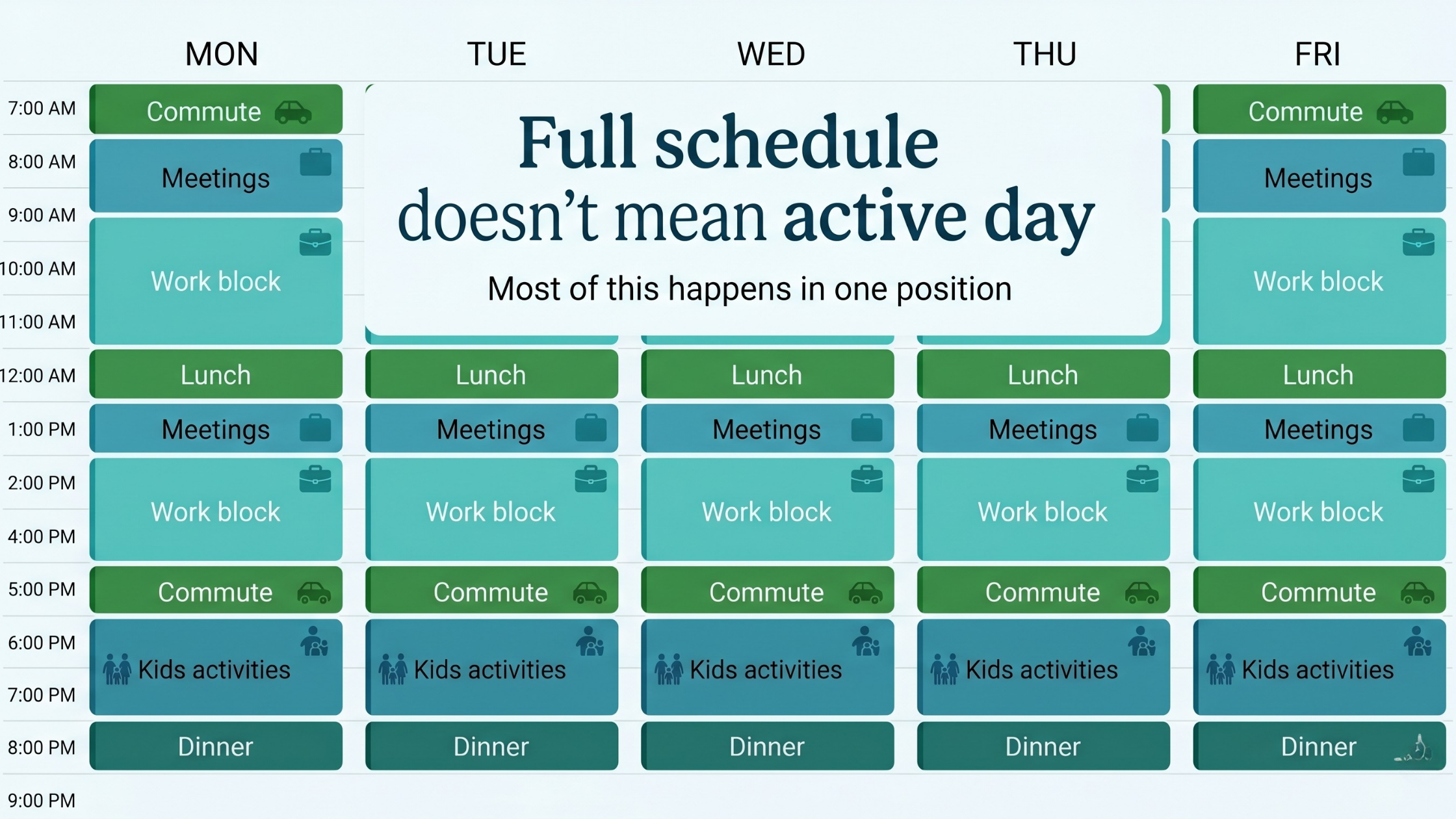
You look at your planner and your day is full.
Meetings.
Work blocks.
Commute.
Family responsibilities.
Events.
It looks busy. Productive. Demanding.
But if you zoom in on what each of those actually requires from your body, most of them happen in one position at a time.
Sitting in a meeting.
Sitting in the car.
Sitting at your desk.
Standing in place at an event.
Sitting and waiting.
Your schedule is full.
But your body is not moving nearly as much as you think.
That’s the disconnect.
Even when life feels busy and schedules look full, long stretches of physical inactivity hide in plain sight, slowly contributing to a sedentary lifestyle.
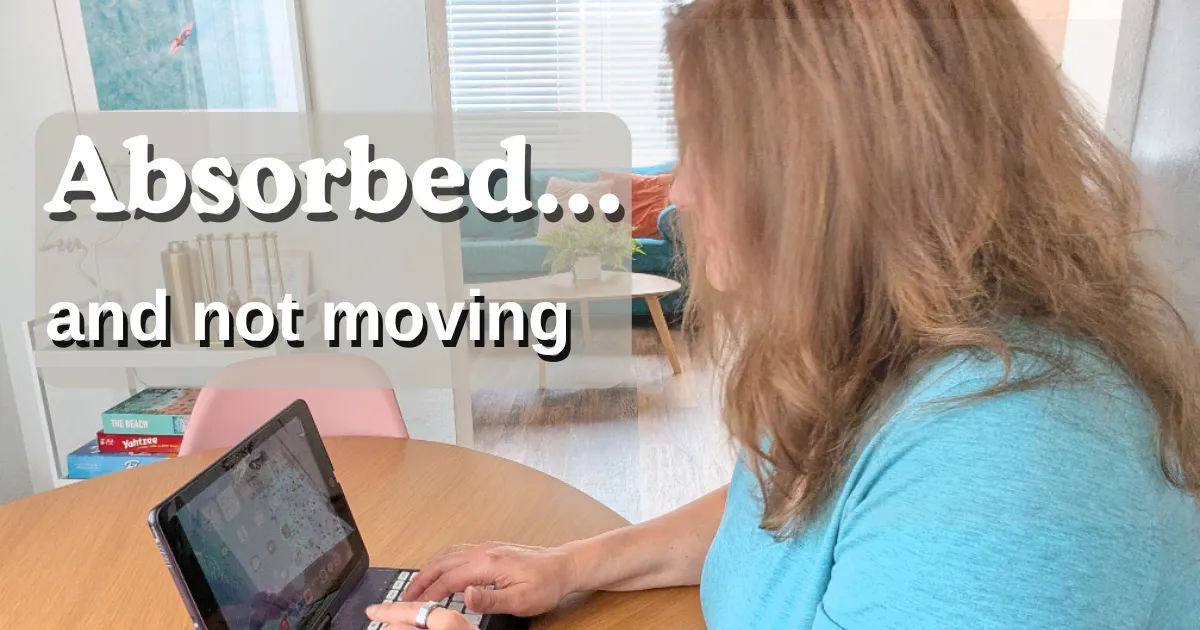
We stay in one position longer than we realize, because we’re absorbed in whatever we’re doing.
Whether that’s work, reading, watching something, or being at our kids’ events.
That’s why it’s so easy to miss how long you’ve been there.
What’s actually building throughout your day
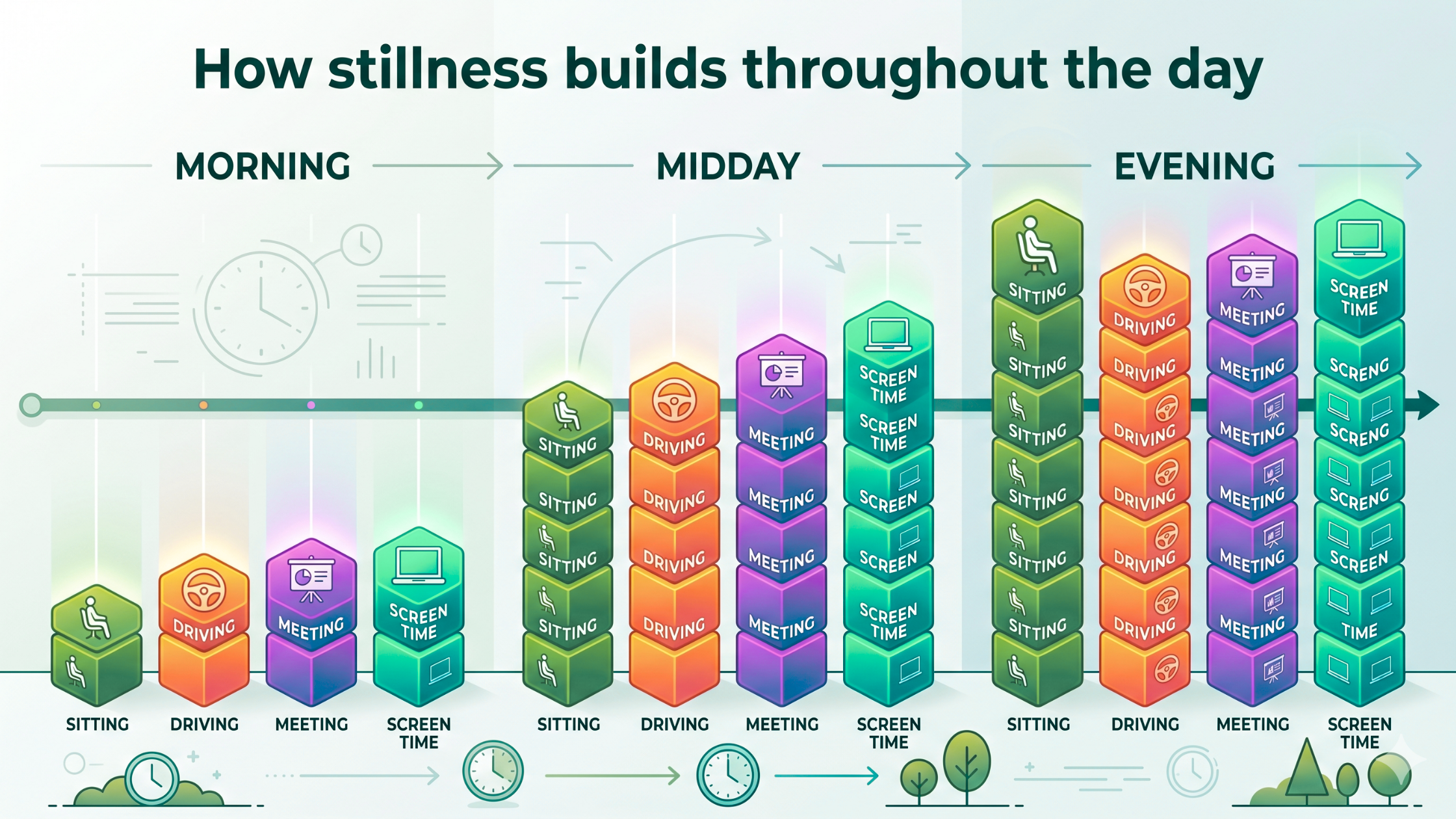
It’s not just that you’re sitting.
It’s how long you stay there.
And how often that happens throughout your day.
Those stretches add up.
Back to back.
Hour after hour.
Even when your day feels productive or social.
This is where the effects of prolonged sitting start to build.
If you’ve read Your desk isn’t the problem, sitting still is
this is exactly where that idea starts to show up in real life.
That accumulation is what drives what you feel later:
Stiffness
Fatigue
Brain fog
Energy dips
You usually don’t feel it first thing in the morning.
It builds.
Midday.
End of day.
That’s when your body starts talking back.
It’s similar to what I describe in Your stress bucket is filling all day
where small inputs accumulate until something starts to overflow.
What the research shows
Prolonged sitting is associated with increased risk of cardiovascular and metabolic disease
Breaking up sitting time improves blood sugar control and circulation
Even short bursts of movement can positively impact health markers
This isn’t just about how you feel in the moment. It’s also about what’s building underneath over time.
Why you don’t notice it
If you pay attention, you’ll start to see it.
You’re working on something and look up.
Two hours have passed.
You sit down for a minute to check your phone.
An hour later you’re still there.
You’re on a long drive and realize you missed exits because you were on autopilot.
You’re at a game or event, sitting in the same position the whole time.
You stand up and something feels off.
None of that feels like “doing nothing.”
But your body experiences it as stillness.
What most people do instead
When you start to feel it, most people try to solve it in ways that don’t quite match the problem.
When you feel tired, you reach for caffeine.
Or you rest and stay still in a different position.
When you feel stiff, you might stretch, but not always in the ways or directions your body actually needs.
Or you wait until your workout.
But as I explain in You can’t out-exercise sitting
one workout can’t undo hours of inactivity.
The problem didn’t come from one moment.
It came from the accumulation between them.
What actually helps
It’s not your schedule.
It’s the long stretches of stillness inside it.
And most people don’t notice how often that’s happening.
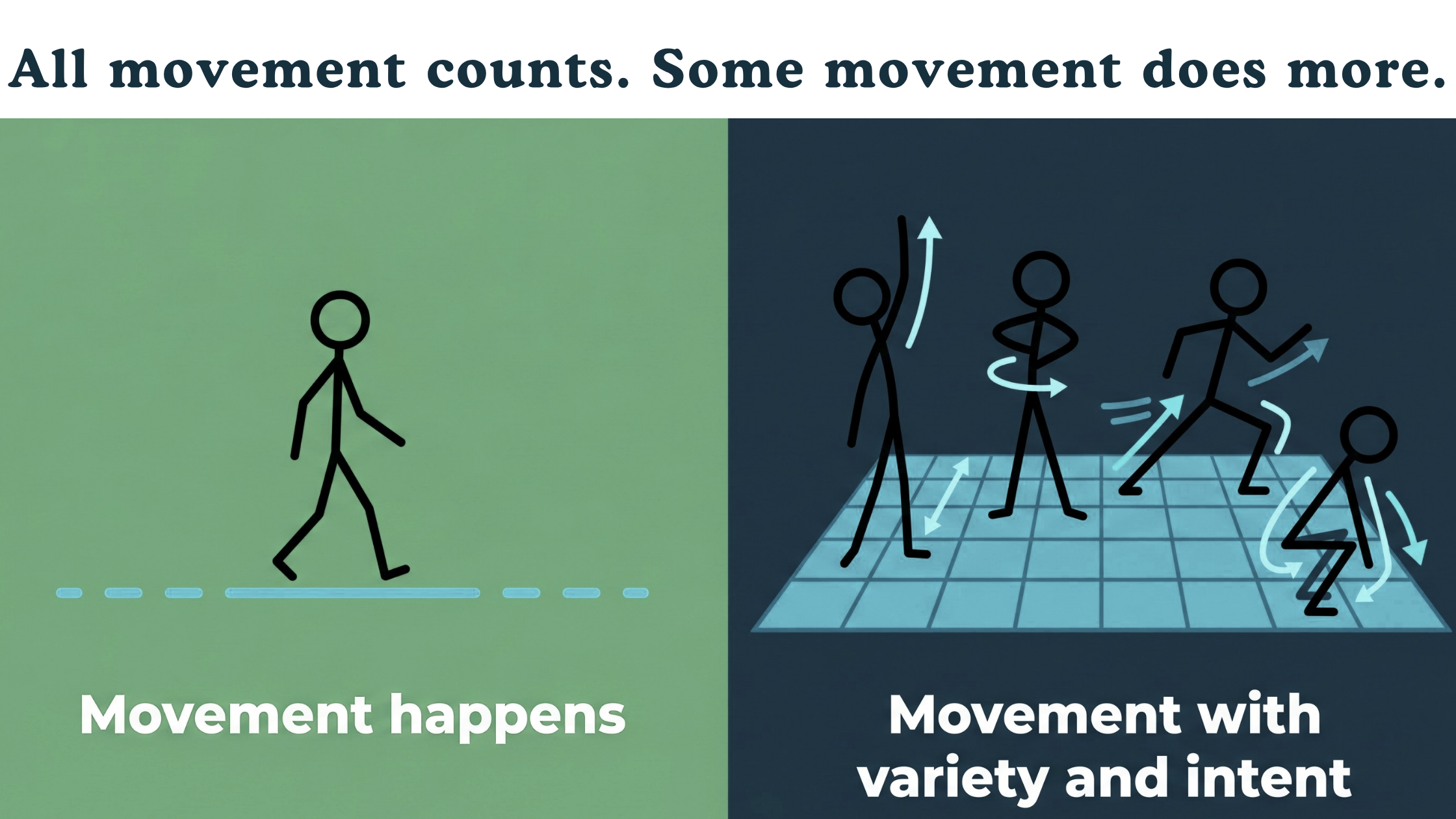
All movement matters.
Standing up.
Walking to get water.
Going to the bathroom.
That all counts.
But when you break up sitting time with:
Variety
Different directions
Different positions
A bit of intensity
Those same 1 to 3 minute movement breaks become more meaningful.
That’s where things start to shift faster.
This is the foundation of what I outline in Disrupt Stillness Method: why 3-minute movement breaks change everything
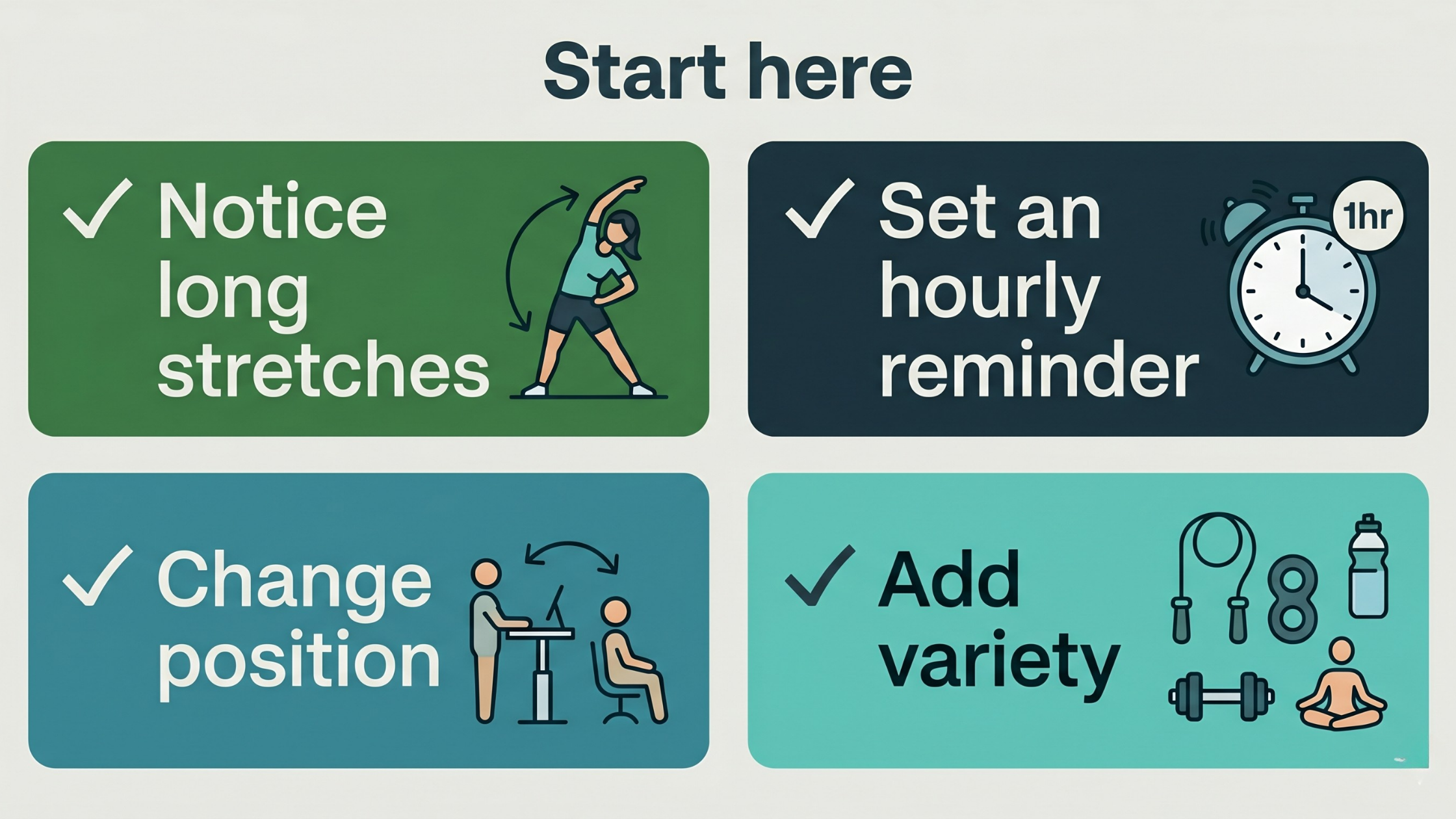
Start here
A simple place to start is awareness.
Take an honest look at your day.
Where are the long stretches?
Where are things not changing?
Then do one simple thing.
Set a reminder.
Every hour, change something.
Position.
Direction.
Intensity.
It doesn’t have to be long.
But it needs to be intentional.
See where you fall
Use the Sit Risk Scorecard to find out if you’re in the Green, Yellow, or Red Zone:
If you want a simple place to start
If your schedule already feels full and you don’t want to figure out what to do in those small windows, there are simple ways to build short, structured movement into your day without adding more time.
You can learn more about Metabolic Burners here.
To smarter health through strategic movement,
Lori
Your Movement Detective


