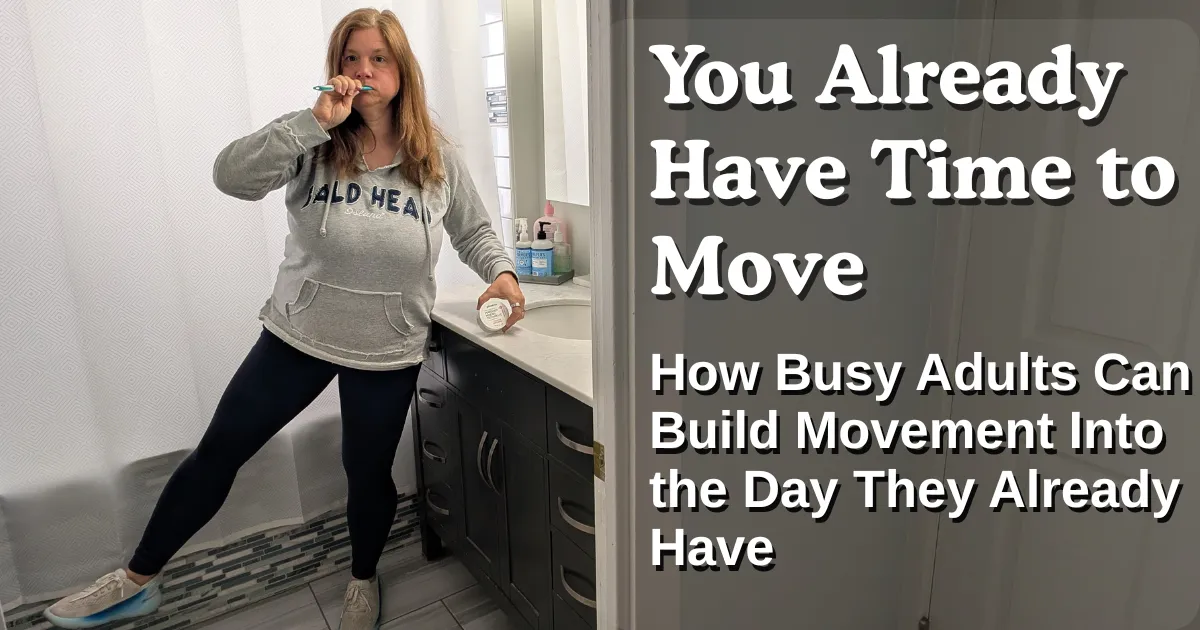
You Already Have Time to Move. Here's How to Use It Smarter.
This is a hill I'm willing to die on.
You do not need to work out more to feel better.
I know that's not what the fitness industry wants you to believe. But after 30 years as a physical therapist, and as someone who ends most days exhausted with zero desire to change into workout clothes and commit to an hour-long class, I believe it with everything I have.
And now the research is backing me up.
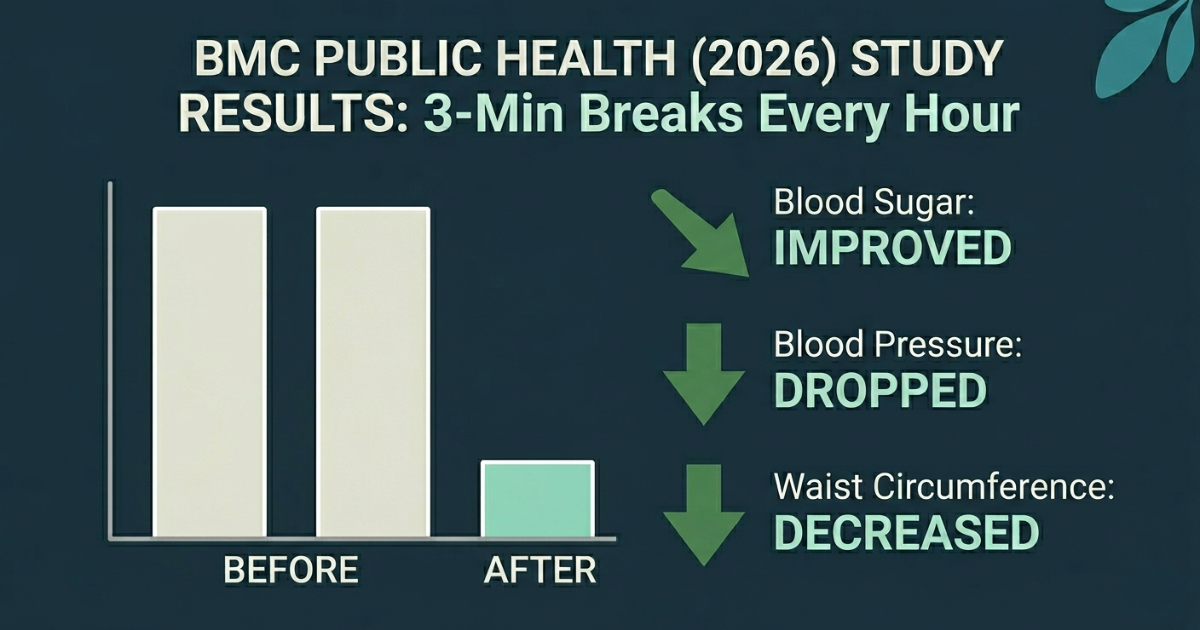
A 2026 randomized controlled trial published in BMC Public Health gave sedentary office workers one simple instruction: take a 3-minute movement break every hour during the workday. That's it. After 12 weeks, blood sugar improved, blood pressure dropped, and waist circumference decreased. And 82% of participants stuck with it.
Not because they were disciplined athletes.
Because three minutes is actually doable.
The math we've been doing is wrong
For years, the goal has been 150 minutes of moderate exercise per week. That's a real, evidence-based target. The CDC pairs that with a second recommendation most people overlook entirely: muscle-strengthening activity at least two days per week, working all major muscle groups.
Two recommendations. Most people are struggling to meet even one of them.
But somewhere along the way, most people interpreted the 150 minutes as: find a 45 to 60 minute window five days a week, or don't bother. You can't out-exercise sitting.
For busy parents, professionals, and people with full lives, that window rarely appears. And when it doesn't, the guilt shows up instead.
Here's what I want you to consider.
What if two solid workouts a week, a long walk with friends on the weekend, a class you actually enjoy, combined with intentional 3-minute movement breaks throughout your weekdays actually got you there? And what if those daily movement breaks also started chipping away at that strength and stability your body needs?
Because they can.
And more importantly, it changes how movement feels. It stops being the thing you failed to do today. It becomes the thing you're already doing.
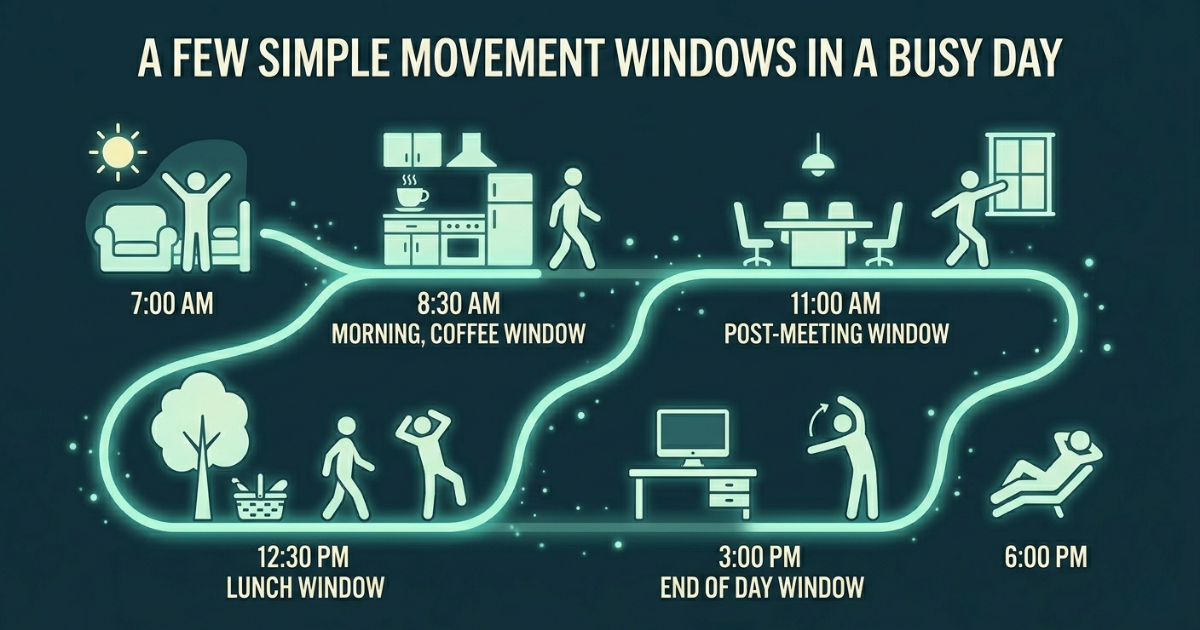
The windows are already in your day
You don't need to add anything to your schedule. You need to look at what's already there differently. It's not your schedule, it's the long stretches of stillness.
You brush your teeth every morning. That's two minutes standing in place. What if you added a simple stability drill?
You make coffee and wait for it to brew. There's three minutes.
You finish a meeting and transition to the next thing. That gap is a window.
You get out of your car after a long drive. Your hips and lower back are already talking to you. That's a window. I can show you a 3-minute stability routine you can do right there, pushing and pulling against your steering wheel, before you ever walk inside.
You finish eating lunch. Ten minutes of easy walking after a meal has been shown to help lower blood sugar. That's not exercise. That's just moving after you eat.
End of the workday. Waiting at your kids' activities. Waiting for anything. All windows.
None of this requires a gym, a change of clothes, or a block of time you don't have.
Keep a few simple tools within reach
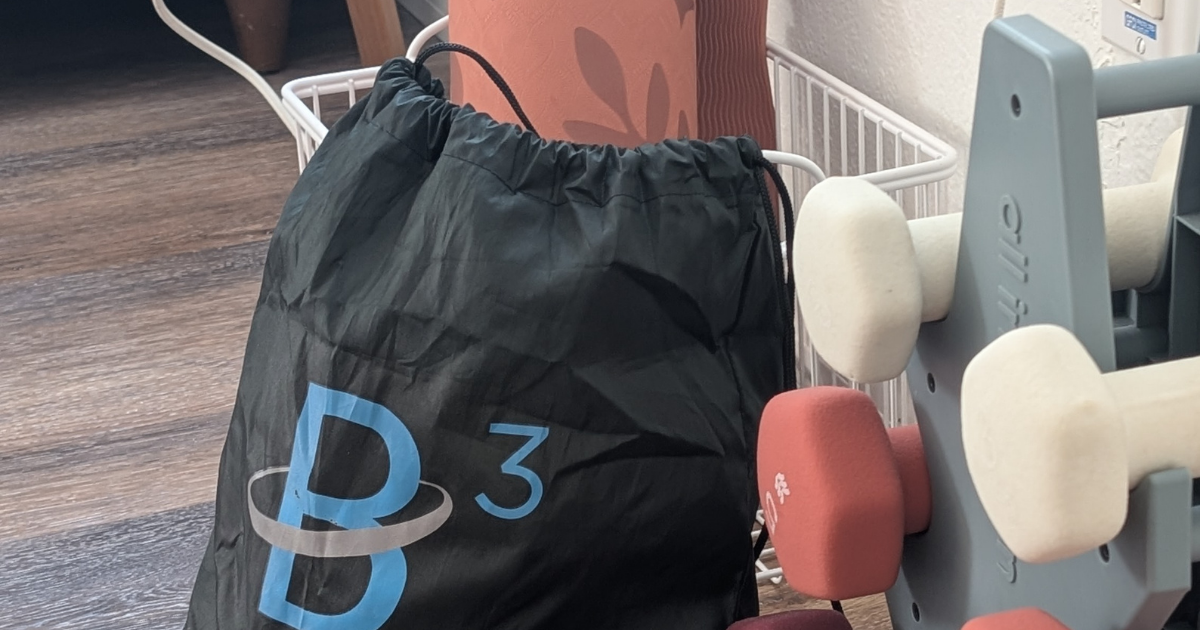
One thing that makes those three minutes even easier is having a few simple tools close by. A yoga mat, a set of light dumbbells, a resistance band or loop, a couple of yoga blocks. None of it takes up much space. Keep a small kit at your desk, toss one in your car, leave one by the couch. When the window opens you want to be ready, not searching for gear. The less friction between you and moving, the more likely it actually happens.
Three minutes done consistently beats sixty minutes done occasionally
The reason the BMC study worked isn't complicated. Consistency at a low barrier wins over intensity at a high barrier. Every time. This is the core of the Disrupt Stillness Method.
When movement is woven into what you're already doing, it stops being a decision you have to make. It becomes part of the day. And that accumulation, done daily across multiple small windows, adds up to something real.
Your circulation improves. Your metabolism stays more active throughout the day. Your energy doesn't crater at 3pm. Your body doesn't arrive at evening stiff and locked up from hours of stillness.
You start to feel different. Not because you did more. Because you did it smarter.
It spreads
Here's my favorite part of this whole approach.
When you start moving intentionally during your day, people notice. A coworker sees you doing something at your desk and asks what you're doing. A friend catches you doing a quick reset before getting back in the car. Your kid watches you move after dinner instead of collapsing on the couch.
And then they join you.
Three minutes with a friend is more fun than three minutes alone. Now you both have accountability. Now it's something you do together.
That's how habits actually stick. Not through willpower. Through environment and the people around you.
Where to start
Pick three windows in your day. Just three.
One in the morning. One midday. One in the afternoon or evening.
In each window, do something intentional for 3 minutes. It doesn't have to be the same thing every time. In fact it shouldn't be. Your body responds better to variety, different directions, different positions, different levels of effort.
If you're not sure what to do in those windows, that's exactly what the Sit Safer Move More program was built for. Short, structured movement already organized and matched to what your body needs, so you're not guessing.
You don't need more time. You need a smarter strategy for the time you already have.
To smarter health through strategic movement,
Lori
Your Movement Detective
P.S. Enjoyed this Pearl of Wisdom? Don't miss the next one! If this was forwarded to you, [click here] to subscribe so you get every new post sent directly to your inbox.
Source:


